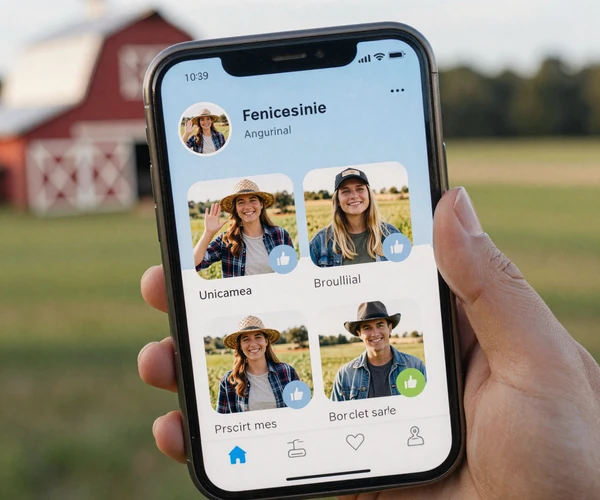
Niche dating apps outperform mainstream platforms for rural singles by a factor of three in meaningful connection rates - yet most farmers still start their online dating journey on Tinder or Bumble. The result? Weeks of swiping through profiles of city dwellers who have never seen a sunrise from a tractor cab, let alone understand why you cannot make dinner plans during harvest season. If you have ever felt invisible on a mainstream dating app, you are not alone. There are over 2 million farms in the United States (USDA Census 2022), and the singles running them deserve a dating experience built for their lifestyle - not retrofitted from a platform designed for 25-year-olds in Manhattan.
This article breaks down exactly why mainstream apps fail rural America, compares the top platforms head-to-head, and reveals the strategy dating experts recommend for farmers in 2026. Whether you are growing soybeans in Iowa or running cattle in Texas, the data points in one direction: niche dating sites that actually work are the ones built by people who understand your world.
Key Takeaways
- Mainstream apps show fewer than a dozen profiles within 50 miles in many rural zip codes. Low user density makes Tinder and Bumble nearly useless outside metro areas.
- The smartest strategy is one niche rural platform + one mainstream app. Dating experts at DatingRound (2026) call this the best balance of community fit and reach.
- Community-first platforms outperform swipe-first platforms because they build belonging - not just matches. Activity feeds, wave buttons, and farm-specific profiles change the experience entirely.
Why Mainstream Dating Apps Do Not Work in Rural America
Mainstream dating apps were designed for dense urban populations where thousands of potential matches live within a few miles of each other. Move that model to a county with 12 people per square mile, and the math collapses. DatingRound (2026) identifies geography as the single biggest problem: potential partners are scattered far apart, and even a well-designed app can feel painfully slow when the nearest match is a 90-minute drive away.
But low density is only half the problem. The other half is cultural mismatch. When a farmer in Nebraska matches with someone in Omaha, the conversation often stalls the moment schedules come up. "I can't do Saturday - we're pulling calves" is not something most city-based app users understand. Lovezoid (2026) confirms what every rural single already knows: farmers and ranchers detect fake country enthusiasm immediately, and they grow tired of explaining their lifestyle to people who treat it as a novelty.
"A niche platform may have a smaller user pool, but every person in that pool already understands why you disappear during harvest season."
- DatingRound, 2026 Farmer Dating Guide
Here is where it gets interesting: even when mainstream apps try to serve rural users, their core mechanics work against them. Swipe-based interfaces reward volume - the more profiles you see, the more you swipe, the more ads the platform serves. But rural singles do not need volume. They need relevance. A farmer scrolling through 200 profiles of city professionals is not getting closer to a match. They are getting closer to deleting the app.
The Three Deal-Breakers
- User density: Fewer than 12 active profiles within 50 miles in many rural counties on apps like Tinder and Hinge.
- Schedule incompatibility: No way to signal "I work 16-hour days during planting and harvest" in a standard profile.
- Lifestyle mismatch: Mainstream profiles optimize for nightlife, travel, and dining - not for fence-mending, county fairs, and 4 AM milking routines.